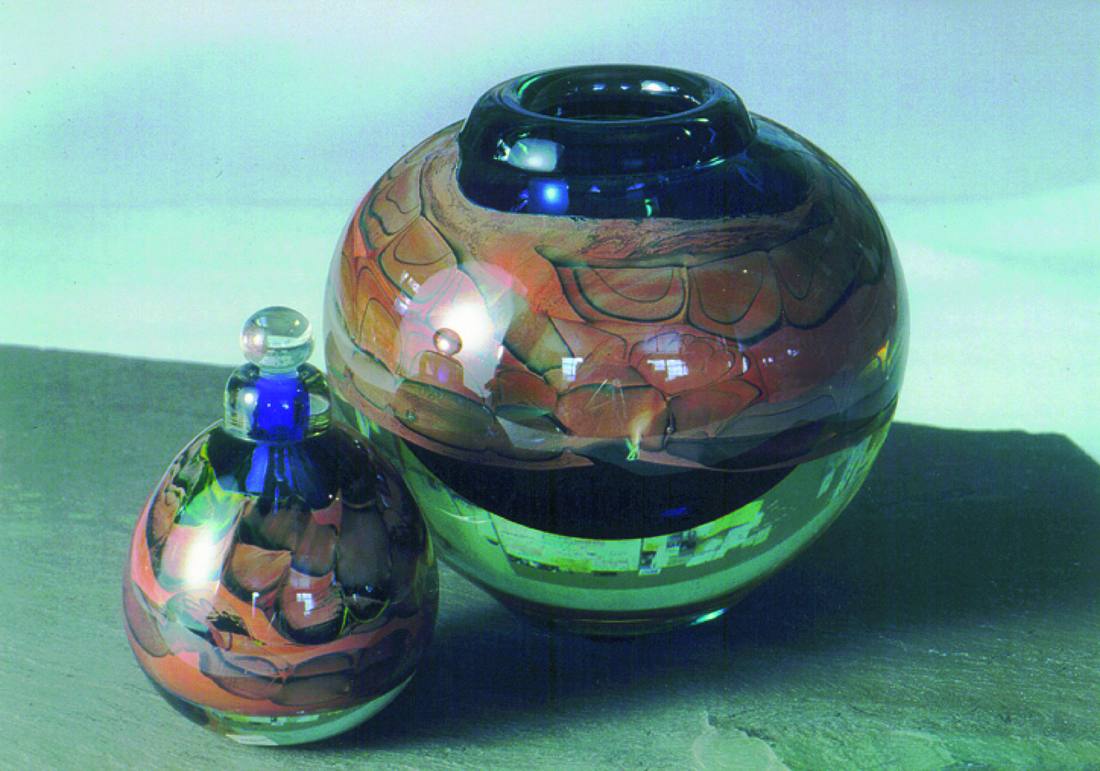
Brent Kee Young
Featured in 4 editions of the Pocket Program — 2007, 2006, 2005, 1999.
2007
Award of Distinction 2006; Award of Distinction 2005Booth 86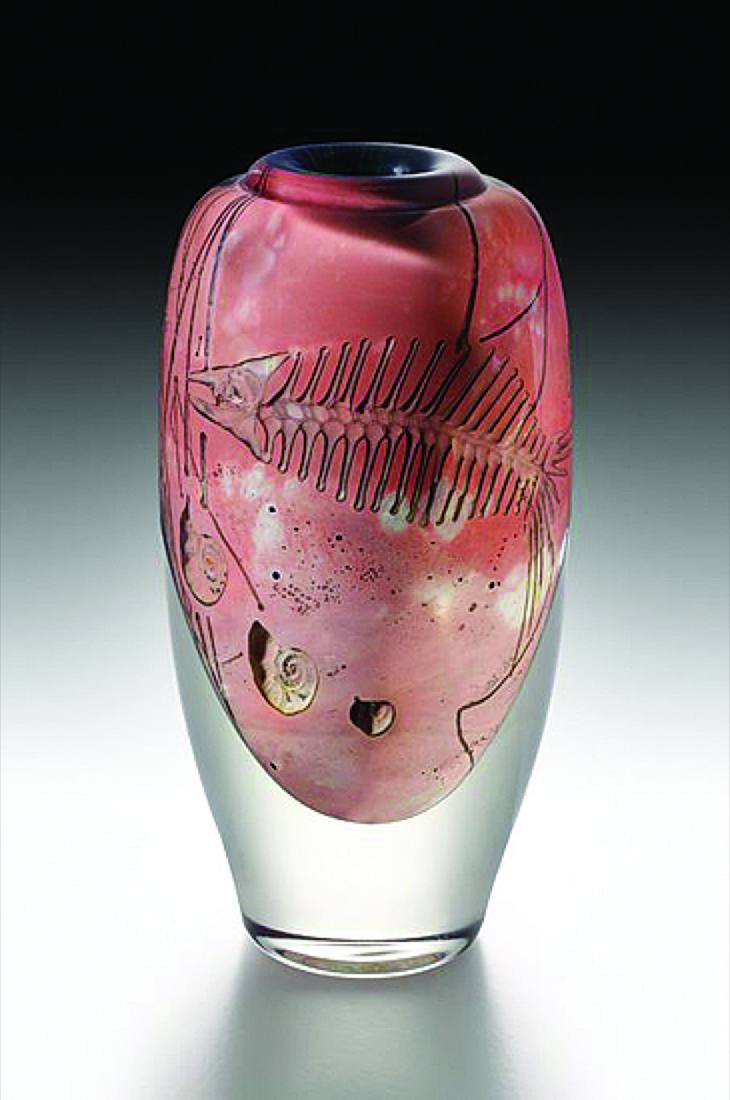
The Fossil Series pieces are made in two stages. The first is the layering of the glass, building up the thickness of the form. As the piece is layered, the imagery is placed in an interior part of the piece. The imagery is made in clear glass, generally lamp worked, as you see it, in positive. Each spine, gill plate, lobe or tail is made separately by hand. The images are then pushed into a softened interior surface so that when the next layer of clear glass is taken over it, the images disappear, leaving their impression. In reality the images remain, but since they are clear, you don't see them, you see through them to their impression. Once the interior surface is finished, including negative imagery, texture and other background structure, several layers of clear glass are gathered to build up the exterior thickness. Mr. Young is also the Professor of Glass and Chairman of the Glass Department at the Cleveland Institute of Art, Cleveland Ohio.
2006
Award of Distinction 2006; Award of Distinction 2005Booth 39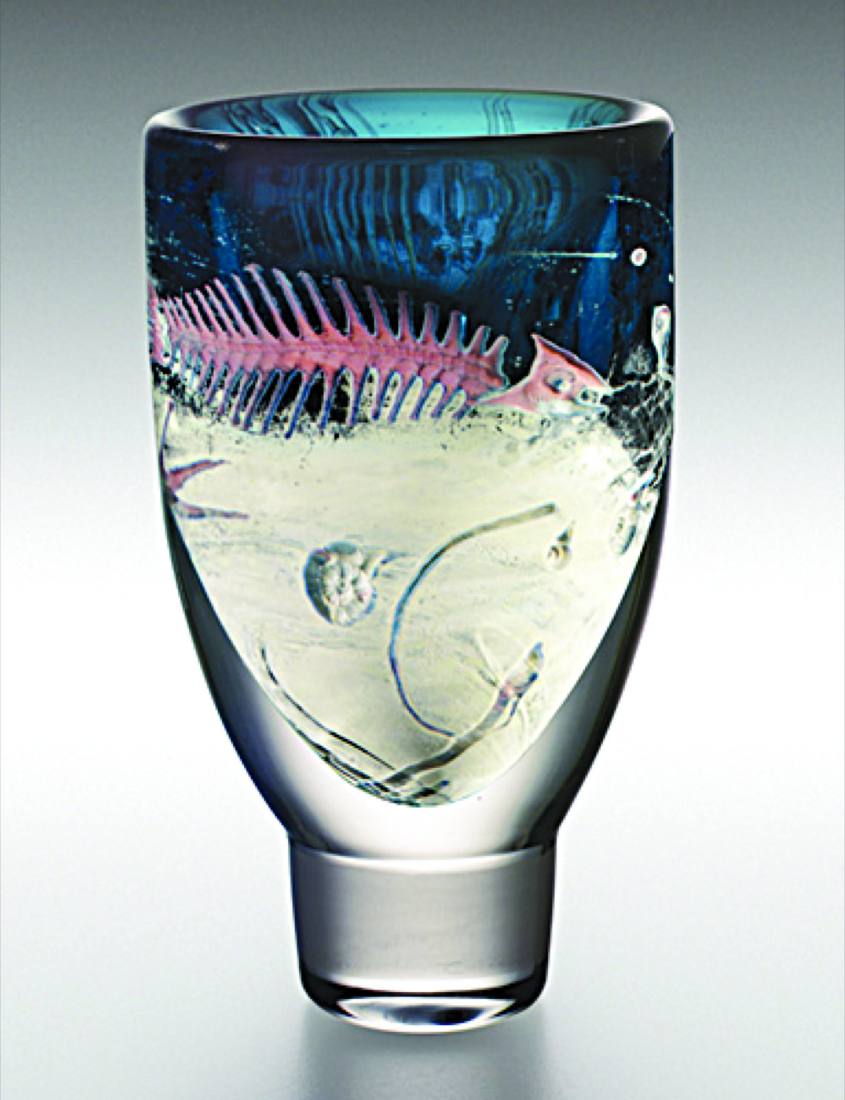
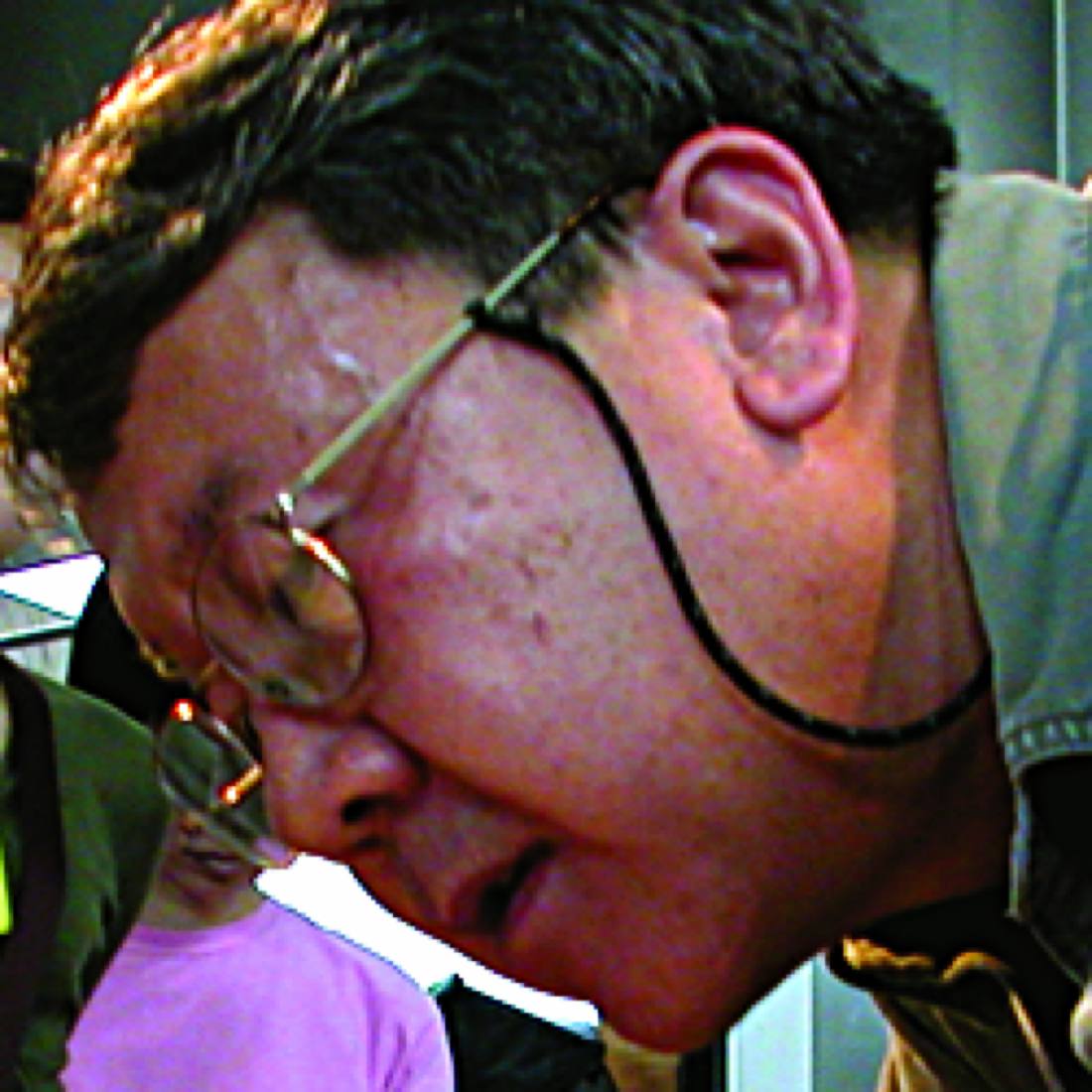
My work speaks of many things: of a respect and reverence for things natural; of ambiguity in space, form, volume and time; and of images that are there and not there. It speaks of the concept of evidence: man's marks, nature's marks – their relation together and apart. It speaks of a respect for tradition, form and craft, and the history of object making. The Fossil Series work exemplifies this. The important imagery, although evident in the form, does not exist visually. What does exist visually is the evidence of what has been. This ambiguity ... "What is important is not seemingly there"... appears in my work in varying degrees and at present seems to be the philosophical and visual thread that keeps the discussion vital. In the Dialogue Series castings, look for images that are positive on one side of the work and are viewed as negative on the other. The importance of my work is not for me to judge. My obligations, commitments, and indeed responsibilities lie in remaining true in thought and observation, and to try to manifest those concerns in my work.
2005
1st Place 2004Booth 14
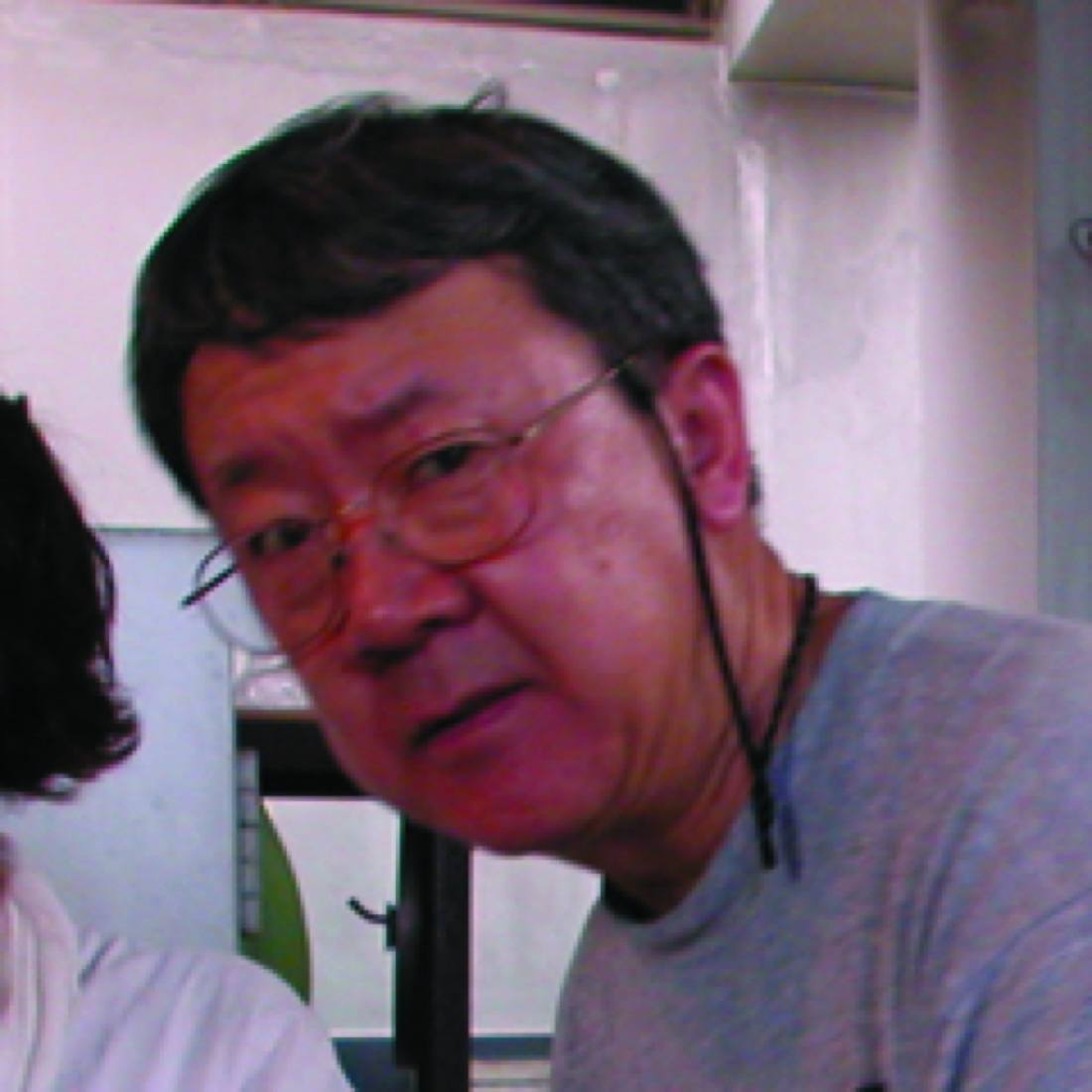
My work speaks of many things: of a respect and reverence for things natural; of ambiguity in space, form, volume and time; and of images that are there and not there. It speaks of the concept of evidence: man’s marks, nature’s marks – their relation together and apart. It speaks of a respect for tradition, form and craft, and the history of object making. The Fossil Series work exemplifies this. The important imagery, although evident in the form, does not exist visually. What does exist visually is the evidence of what has been. This ambiguity ... “What is important is not seemingly there”... appears in my work in varying degrees and at present seems to be the philosophical and visual thread that keeps the discussion vital. In the Dialogue Series castings, look for images that are positive on one side of the work and are viewed as negative on the other. The importance of my work is not for me to judge. My obligations, commitments, and indeed responsibilities lie in remaining true in thought and observation, and to try to manifest those concerns in my work.
1999